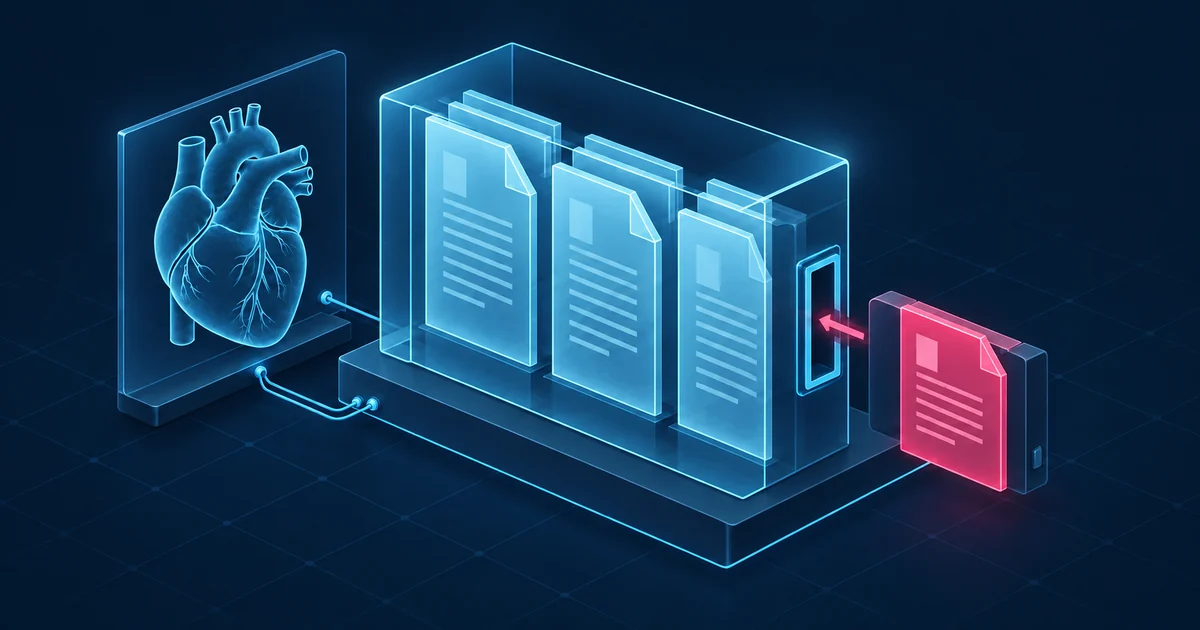
Standardisation of E-document Management: A Step Towards Improving Controllability and Execution Discipline

The increasing volume of official correspondence and internal administrative documents in public institutions places new demands on document management organisation. Different departments often apply their own approaches to document registration, approval, and storage, which complicates execution control and the generation of consolidated reports. As a result, management faces delays in decision-making and a lack of a complete picture of document management.
The absence of unified standards leads to duplicate registers, confusion in document versions, and excessive use of paper copies. Even with separate software solutions, electronic document management remains fragmented and does not provide the necessary level of process transparency.
Managerial Aspect of Standardisation
Standardisation of electronic document management is primarily a managerial task. It involves implementing unified regulations for document registration, routing, and archiving, as well as defining clear deadlines and responsible persons at each approval stage.
Unified rules for working with documents allow for strengthening executive discipline and reducing the impact of the human factor. Management gains the ability to control document management in real-time, generate reports on the status of task execution, and analyse the workload on structural units.
Technical Implementation and New Service
During a working meeting with representatives of public authorities, IQusion presented a comprehensive service for the standardisation and implementation of an electronic document management system based on local servers and the institution's corporate network.
The solution includes an audit of existing processes, development of internal regulations, and configuration of a unified software environment for document registration and approval. Special attention is paid to the integration of document management systems with accounting and HR modules, ensuring the integrity of the information space.
The system is deployed on a central server node with organised secure access for territorial units. Mechanisms for access rights differentiation, user activity logging, and centralised data backup are configured, meeting the information security requirements of a state institution.
Practical Benefits of Implementation
Standardisation of electronic document management allows for reducing the approval times for internal documents and decreasing the volume of paper-based document handling. Automated control of task execution contributes to increased accountability of officials and reduces the number of overdue tasks.
An organised structure of electronic archives simplifies document retrieval and report preparation for regulatory bodies. Simultaneously, costs for storing paper materials and technical support for disparate information systems are optimised.
Systemic Conclusion
Standardisation of electronic document management creates a unified information space for the institution and enhances the controllability of internal processes. The combination of technical solutions with clearly defined regulations ensures operational stability and predictability of management procedures.
IQusion offers public institutions a comprehensive approach to the implementation and standardisation of electronic document management, including analysis of existing processes, development of regulations, integration with current information systems, and ensuring information security. The company's advantage is its systemic experience working with multi-level structures, which allows for considering the organisation's specifics and ensuring controlled implementation without disrupting current operations.