Contract Lifecycle: From Draft to Archival Storage

Successful automation of contract work lies not in simply signing a PDF file with an electronic signature, but in building a continuous chain of metadata transmission. When every stage—from draft generation to archiving—relies on unified compatibility standards, the enterprise gains a managed process with control over data completeness at system interfaces. The situation where a contract agreed upon in a CRM must be manually copied into a separate electronic document management system before signing, losing the link to original client records, is typical for many companies. This creates risks of data desynchronization and requires additional checks.
Designing end-to-end data flow in contract processes
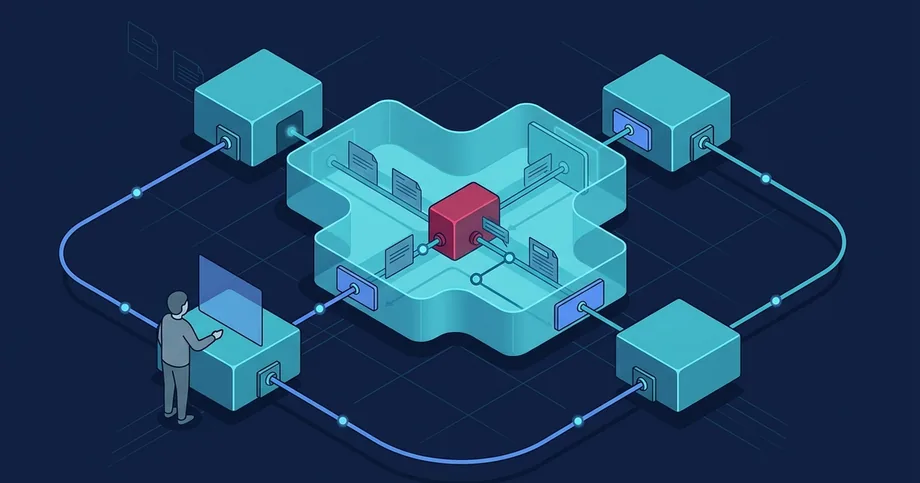
The transition from templating to archival storage is often accompanied by manual copying of details between CRMs, accounting systems, and local archives. This occurs due to the lack of a holistic architectural model. When a company implements separate solutions for each stage, the problem of data integrity loss arises, which increases the risk of errors and reduces document processing speed. To eliminate these gaps, it is necessary to design an architecture where metadata is automatically transferred between the generation, signing, and archiving stages.
This approach preserves the link between the counterparty record and the final document in the archive. It is important to design integration interfaces to avoid function duplication. Each system in the IT landscape must have its own area of responsibility: the CRM is responsible for client data, the accounting system for financial parameters, and the CLM system for coordinating the business approval process.
- Stage 1: Automatic generation. Drafting the contract in the system with automatic population of structured metadata fields and the application of templates.
- Stage 2: Approval and validation. Verification of contract details and terms in the internal document management system without manual data copying between registries.
- Stage 3: Signature application. Applying a qualified electronic signature in accordance with technical compatibility specifications and cryptographic protection standards.
- Stage 4: Archival storage. Creating an archival volume of electronic documents while preserving accompanying metadata for long-term storage.
Integration of electronic signature tools per CAs requirements
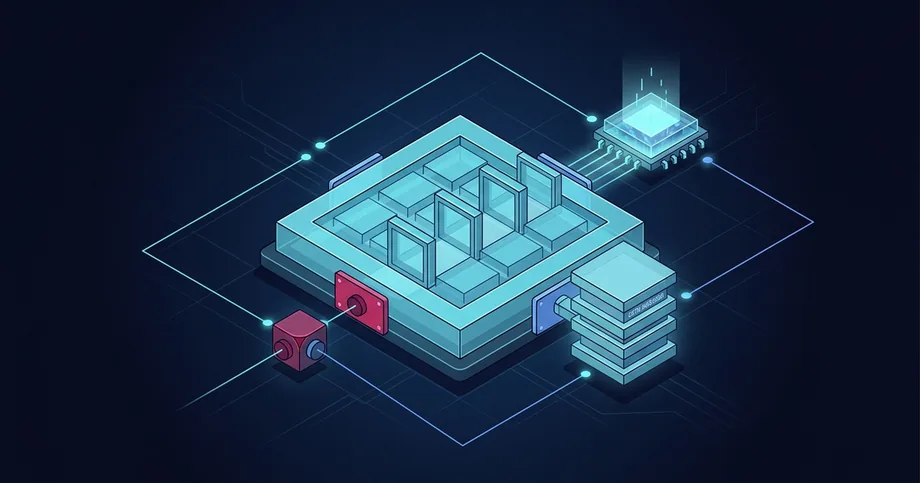
Integrating electronic signature tools into internal enterprise systems requires compliance with technical specifications defined by the Central Certification Authority (CCA). These requirements regulate cryptographic protection and compatibility standards that ensure correct recognition and verification of signatures by different systems. When designing the integration, it must be taken into account that electronic signature, data encryption, and timestamping are completely different cryptographic operations that perform different functions in the information security process.
To ensure long-term confirmation of document authenticity, a signature format with Long-Term Validation (LTV) support is used. LTV is not the name of the timestamp itself, but describes the capability for long-term verification. Specific profiles may contain verification data (certificates, certificate revocation lists, or OCSP responses) along with archival timestamps. The ability to verify over time depends on the format, available evidence, verification policy, and support for cryptographic algorithms.
A separate aspect is verifying the validity of a signature in the past. The current revocation of a signer's certificate does not in itself prove the invalidity of a signature that was applied in the past. To confirm the legal force of such a document, evidence of the signing moment is required, specifically a qualified electronic timestamp, and the application of special rules for verifying the certificate status at the exact moment the signature was created.
Compliance with CCA technical specifications is a basic condition for ensuring the compatibility of electronic signatures between different information systems.
Applying DSTU 4163:2020 requirements to document details
In addition to technical requirements for cryptographic protection, an electronic contract must comply with document formatting standards. In Ukraine, requirements for the formatting of organizational and administrative documents are defined by the DSTU 4163:2020 standard. However, this standard cannot be universally applied to all commercial contracts, as a contract is a bilateral transaction whose form and content are determined by applicable law and agreed-upon terms. The scope of DSTU 4163:2020 and the requirements for a specific document should be checked separately before incorporating them into a template.
Therefore, one should not reduce the entire CLM system architecture solely to the requirements of this standard. However, to ensure a unified document style, it is advisable to configure the template engine to automatically format party details according to generally accepted rules. For example, the DSTU 4163:2020 standard recommends indicating the first name in normal case and the SURNAME in uppercase (e.g., Yurii SYVYTSKYI) in the signature block. Configuring automatic case conversion in templates helps avoid visual inconsistencies.
- DSTU 4163:2020. Recommends rules for formatting details, specifically writing the first name in normal case and the surname in uppercase.
- CCA specifications. Define technical requirements for the integration of QES tools, signature formats, and verification of their compatibility.
- Archival storage procedure. Regulates the formation of archival files and requirements for transferring accompanying metadata to archives.
- System compatibility standards. Ensure the transfer of structured data between CRM, accounting systems, and CLM without loss of links.
Control of agreed contract terms and integration with accounting
After the contract is signed, the stage of monitoring obligation fulfillment begins. In the context of automation, obligation control refers to verifying the compliance of actual operations with agreed contract terms, such as payment deadlines, supply volumes, and product or service specifications. For this, the CLM system must be integrated with the enterprise's accounting and financial systems. Automatic transfer of contract metadata to the accounting system creates conditions for monitoring accounts receivable and tracking contract performance without manual data entry.
IQusion provides services for integrating document management systems, particularly based on the UnityBase platform and the Megapolis.DocNet system. The company's specialists help configure end-to-end metadata flow between CRM, accounting systems, and the electronic archive, ensuring process compliance with technical compatibility requirements and security standards. This allows enterprises to automate routine operations for verifying details and monitoring the fulfillment of agreed contract terms based on structured data.
Formation of archival files and transfer of electronic documents
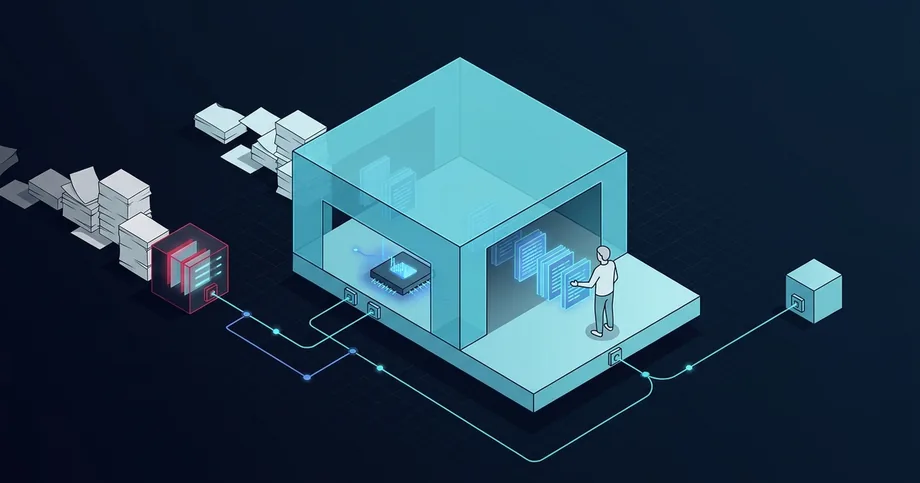
The final stage of the contract lifecycle is its archival storage. Transferring electronic documents to an archive requires compliance with the established procedure for forming archival files and accompanying metadata. It should not be assumed that all requirements for archival metadata are universally mandated by law, as the specific set of mandatory attributes often depends on the enterprise's internal instructions and the requirements of the specific archival institution to which the documents are transferred.
When designing the archive module, it is necessary to provide for automatic grouping of contracts into files according to the nomenclature, generation of an internal inventory, and export of accompanying metadata in a format suitable for long-term storage. This ensures the ability to quickly search for a document and verify its integrity throughout the entire defined retention period.
- Metadata completeness check. Verifying the presence of all mandatory attributes of the contract record before sending it to the archive.
- File format validation. Checking the compliance of document formats with long-term storage requirements established by the company.
- Signature integrity check. Verifying the existence of evidence of the signing moment and the validity of certificates at that time.
- Formation of archival files. Automatic grouping of electronic documents into files according to the approved nomenclature.
- Creation of internal inventory. Generating a registry of documents included in the formed archival volume.
- Export of accompanying data. Preparing a structured metadata file for transfer to the archival system.
FAQ
How to handle QES validation errors during integration per CCA requirements?
The system must record the certificate verification status in real-time and block further document movement if the signature does not meet technical compatibility specifications or if the certificate was not valid at the time of signing.
Is it mandatory to apply DSTU 4163:2020 to all commercial contracts?
The applicability of the standard is checked for the specific type of document and its conditions of use. Requirements for the form and content of a contract cannot be replaced solely by formatting rules for details. Agreed rules should be fixed in templates and checked when they are modified.
What metadata is mandatory for transferring an electronic contract to an archive?
The set of mandatory metadata is determined by the enterprise's internal instructions and the requirements of the archival institution. It usually includes party details, signing date, information about signatures, and timestamps.