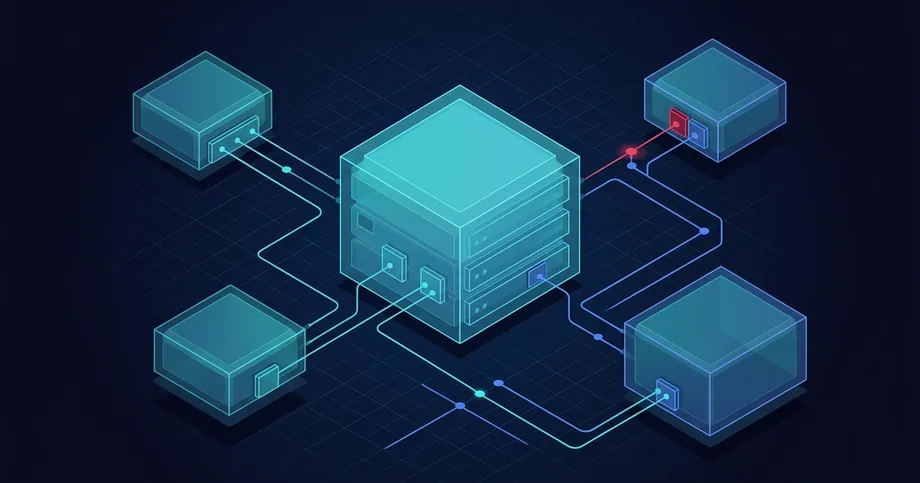
Event or Batch Processing: Choosing an Integration Approach
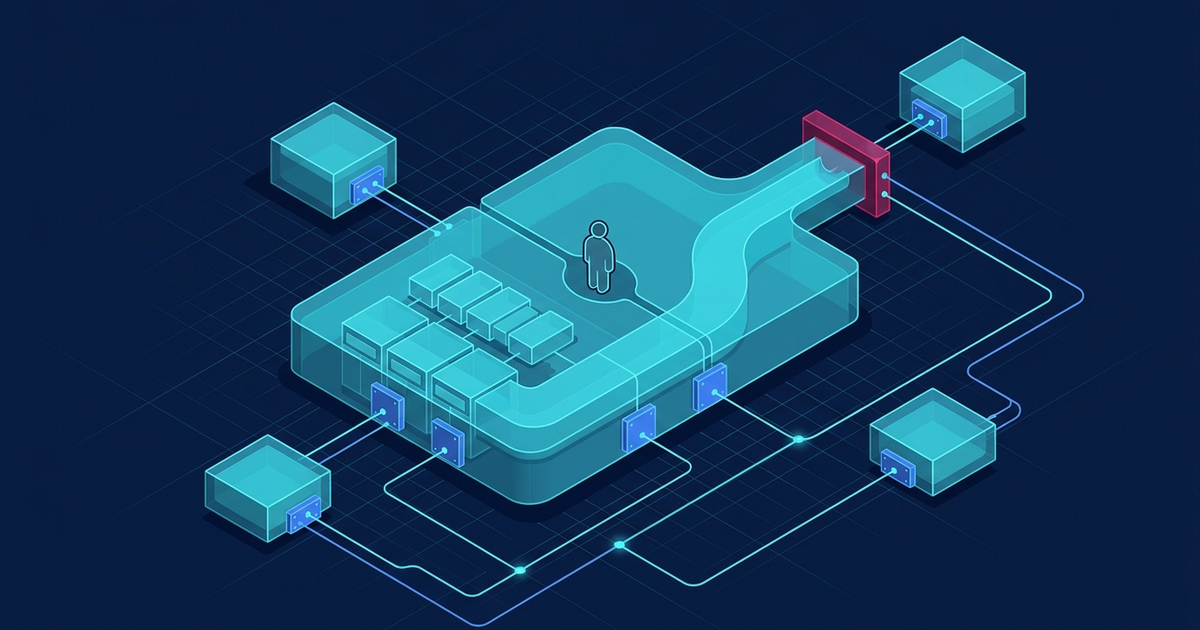
Typical scenario: the team adds events to update statuses but receives duplicate messages and faces more complex error parsing. Before scaling this approach to all streams, it is worth determining where data is truly needed immediately and where periodic updates are acceptable. The choice between event-driven and batch exchange depends on data freshness requirements, operational consistency, and the team's ability to maintain the chosen mechanism.
The architectural style of integration determines not only the speed of data transfer but also the base cost of infrastructure maintenance and the level of engineering effort required to ensure transaction integrity.
Comparison of architectural rhythms by key parameters
For this comparison, batch exchange means processing a bounded set of data on a schedule or after a trigger condition; event-driven exchange means publishing selected events and having consumers react asynchronously. These models are not mutually exclusive: an event may start a batch job, and a stream may be processed in micro-batches. The matrix below shows typical differences but does not replace analysis of the specific process.
| Parameter | Batch Exchange | Event-Driven Architecture (EDA) |
|---|---|---|
| Latency | Depends on the run interval and processing time | Depends on the queue, handlers, and load |
| Infrastructure load | Peak, predictable during runs | Distributed, depends on event intensity |
| Data consistency | Determined by batch transaction boundaries | Often eventual consistency between individual handlers |
| Retry handling | Restarting the batch or a part with retry control | Retries require receiver idempotency |
| Operational complexity | Requires progress control and batch recovery | Requires tracing, lag monitoring, and failure handling |
For each stream, it is worth agreeing on the acceptable data age. A reference book that changes rarely can be updated in batches if it meets consumer needs. For real-time status tracking, event-driven exchange should be evaluated. Financial reconciliation can complement any option by checking for missed or duplicate operations. Such examples do not automatically determine the architecture: the decision depends on the specific process.
Delivery guarantees and idempotency design challenges
In event-driven architectures, loose coupling between components allows for independent scaling but creates challenges for maintaining data integrity. A common delivery model is 'at-least-once'. Due to network failures, timeouts, or service restarts, the same message may be delivered and processed multiple times; the exact behavior depends on the broker and client configuration.
To prevent duplication of business operations, an architect must design idempotent handlers (Idempotent Receiver). Reprocessing the same message should not change the system state after the first successful execution.
- Idempotency keys One common approach is to use a stable identifier for the message or business operation and retain information about values that have already been processed. Depending on the scenario, this may be a dedicated table, a unique constraint, a state version, or another atomic mechanism.
- Consumer transaction boundary If the broker, database, and platform support a shared transaction boundary, the business-state change and message acknowledgement can be committed atomically. A transactional broker session (Transactional Client) does not by itself combine a separate database and broker. Otherwise, persist the state before acknowledging the message and handle possible redelivery idempotently.
- Transactional Outbox When one operation must change database state and publish an event, commit the business change and outbox record in the same local transaction, then have a separate relay publish the event. Consumers must still tolerate duplicates.
- Limited deduplication windows A broker can suppress duplicates only within its configured window; the duration and limits depend on the platform. The application must handle later duplicates safely.
- Isolation via DLQ After the configured retry policy is exhausted, the broker or application may route a message to a DLQ for later analysis.
Technical challenges of 'at-least-once' delivery guarantees and designing idempotent handlers are critical for protecting data integrity. Without proper idempotency implementation, the system risks encountering transaction duplication, leading to serious financial and operational consequences.
Message ordering should not be assumed to be globally guaranteed either. If correctness depends on order, route events for the same entity by a common key to the same partition or session, add a version or sequence number, and define how to handle stale, missing, and duplicate events. Stronger ordering guarantees usually limit parallelism.
Operational complexity and error handling in distributed systems
In a batch process, execution and recovery boundaries are often easier to observe as a single job, although partial completion, duplicate loading, checkpointing, and recovery still require deliberate design. In EDA, one business process may be distributed across many independent handlers, so a failure in one of them can cause discrepancies that emerge later. This makes end-to-end tracing and diagnosis more difficult, but the actual complexity of either approach depends on the specific flow.
Use bounded retries with backoff and jitter for transient failures; non-retryable failures may be isolated immediately. After the retry policy is exhausted, the broker or application may route a message to a Dead Letter Queue (DLQ). A DLQ helps keep a problematic event out of an endless retry loop, but it does not by itself guarantee queue progress or preserve FIFO ordering.
DLQs and deduplication windows can be part of a resilient event-driven architecture, but they do not replace monitoring, controlled redrive, and recovery procedures. Their parameters should be chosen according to the delivery model, ordering requirements, and the acceptable risk of repeating a business operation.
Economic justification and cost optimization
Batch jobs can be run on temporary computing resources if the platform and load profile support it. Event-driven handlers can also scale as needed, particularly in managed services. Therefore, one should compare specific configurations rather than assuming one model is always cheaper. Calculations include base service costs, requests, transferred data, storage, and maintenance.
Hybrid exchange requires shared identifiers and data ownership rules. If a single change can arrive both as an event and in a subsequent batch, the receiver must recognize it as the same operation. Before implementation, it is worth checking the order of applying changes, recovery after skips, and data replay. The presence of a REST API does not in itself mean a ready-made event-driven integration.
- What is the base maintenance cost of a message broker cluster in standby mode?
- How are data transfer volumes and API request counts for queues billed?
- What costs are anticipated for storing messages in queues and DLQs?
- Does the infrastructure support automatic resource scaling to zero?
- What is the cost of monitoring and distributed tracing tools?
- What throughput limits are set by the provider for handlers?
Economic justification requires calculating TCO for specific configurations: managed or self-hosted brokers, event handlers, batch jobs, and observability tooling. Both event-driven and batch components may remain active or scale on demand; the result should be checked against a measured load profile.
Algorithm for choosing an integration rhythm
To choose the optimal integration rhythm, one should evaluate resource costs and run frequencies, not just data transfer speed. Architectural design should be based on clear business metrics. Below are the steps for making a decision.
- Defining latency requirements Assess how quickly the business process needs to receive data. If a delay of several hours is acceptable, batch exchange is worth considering as a baseline option; the final choice also depends on the number of consumers, the need for loose coupling, and independent scaling.
- Analyzing consistency requirements Define the atomicity boundaries and whether strong consistency across services is required. If a business invariant allows no inconsistency window, keep it within one atomic transaction or use a coordination mechanism that explicitly provides the required guarantee. Saga compensation does not create a single isolated distributed ACID transaction.
- Evaluating throughput Calculate data volume, transaction frequency, and replay requirements. For large historical datasets, batch processing can often be an efficient option, but this should be validated against the actual workload profile and selected platform.
- Calculating Total Cost of Ownership (TCO) Compare specific configurations: base service costs, requests, data transfer and storage, scaling, monitoring, and support. Do not assume that event-driven infrastructure is always permanently active or that batch resources are always ephemeral.
A step-by-step assessment of critical business-process parameters helps identify the appropriate interaction model for each flow. The result may be a batch, event-driven, synchronous, or hybrid approach; the transition path depends on the current system, its risks, and the team's capabilities.
FAQ
How to handle a situation where messages in the DLQ accumulate faster than engineers can analyze them?
Monitor not only DLQ size but also arrival rate, the age of the oldest message, and error categories. Use bounded retries with backoff and jitter for transient failures, and isolate non-retryable failures without unnecessary attempts. After fixing the cause, redrive messages in controlled batches with idempotent handling; merely increasing retries can worsen overload.
Is it possible to ensure strict transactional consistency in an event-driven architecture without using synchronous calls?
Atomicity boundaries need to be defined for the specific system. Saga coordinates a sequence of local transactions and compensations but does not provide isolation of a single distributed ACID transaction. If such a guarantee is required, the architecture and coordination mechanism must be verified separately.
How to correctly determine the size of the deduplication time window for idempotent handlers?
A broker's deduplication window suppresses repeat publication only within the limits of that service. The consumer-side retention period should account for retries, delayed delivery, DLQ redrive, replay, and producer resubmission. If that horizon exceeds the broker's capabilities or has no clear bound, use a durable idempotency mechanism such as a stable business-operation identifier or a unique constraint.
Sources
- Azure Architecture Center: Event-driven architecture style
- Enterprise Integration Patterns: Transactional Client
- AWS Prescriptive Guidance: Transactional Outbox
- AWS SQS: at-least-once delivery
- Microservices.io: Idempotent Consumer
- AWS SQS: dead-letter queues
- Azure Service Bus: duplicate detection
- AWS SQS FIFO: deduplication
- Azure Architecture Center: Publisher-Subscriber pattern
- Azure Architecture Center: Saga pattern