UnityBase for the public sector: features and benefits
Digitalisation of Ukraine's public sector requires a comprehensive approach to implementing IT solutions that ensure efficiency, transparency, and accessibility of services for citizens. A key element of success is the choice of reliable and flexible technological platforms.
This was discussed by Serhii Balashuk, Director of IQusion IT LLC, and Mykhailo Vyhovskyi, Member of the Supervisory Board of Intecracy Group, during an online conference for partners held on 1–2 February 2024.
What public sector challenges does the platform address
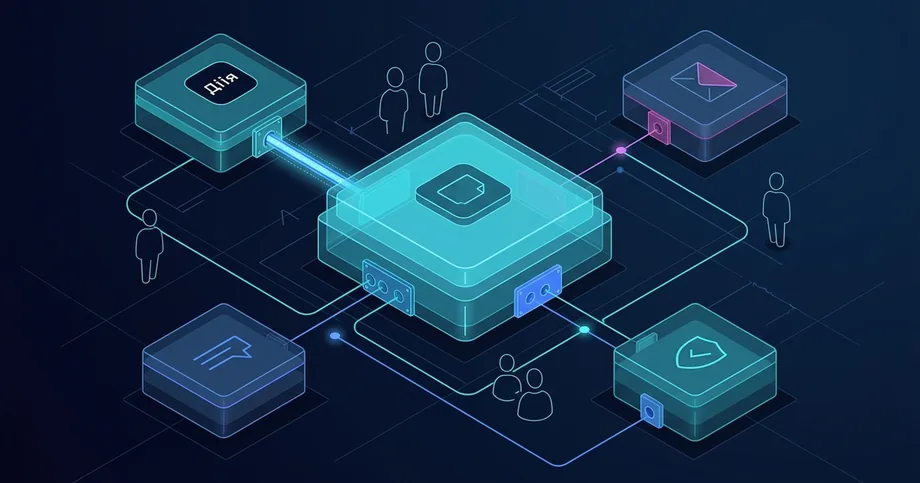
UnityBase can serve as the technological layer for EDMS, registries, employee portals, and inter-system interaction. The specific configuration depends on the institution's requirements, but typical scenarios share a common foundation.
- management of documents, cases, and tasks;
- internal registries and reference books with a single data model;
- approval routes and monitoring of execution discipline;
- integration with state and corporate information systems;
- role-based access, audit of actions, and segregation of duties;
- gradual expansion of functions without migrating to another platform.
For public IT architecture, the critical factor is not the speed of creating an individual screen, but the ability to develop the system over years without losing control over data, access, and changes.
Architecture of the UnityBase solution
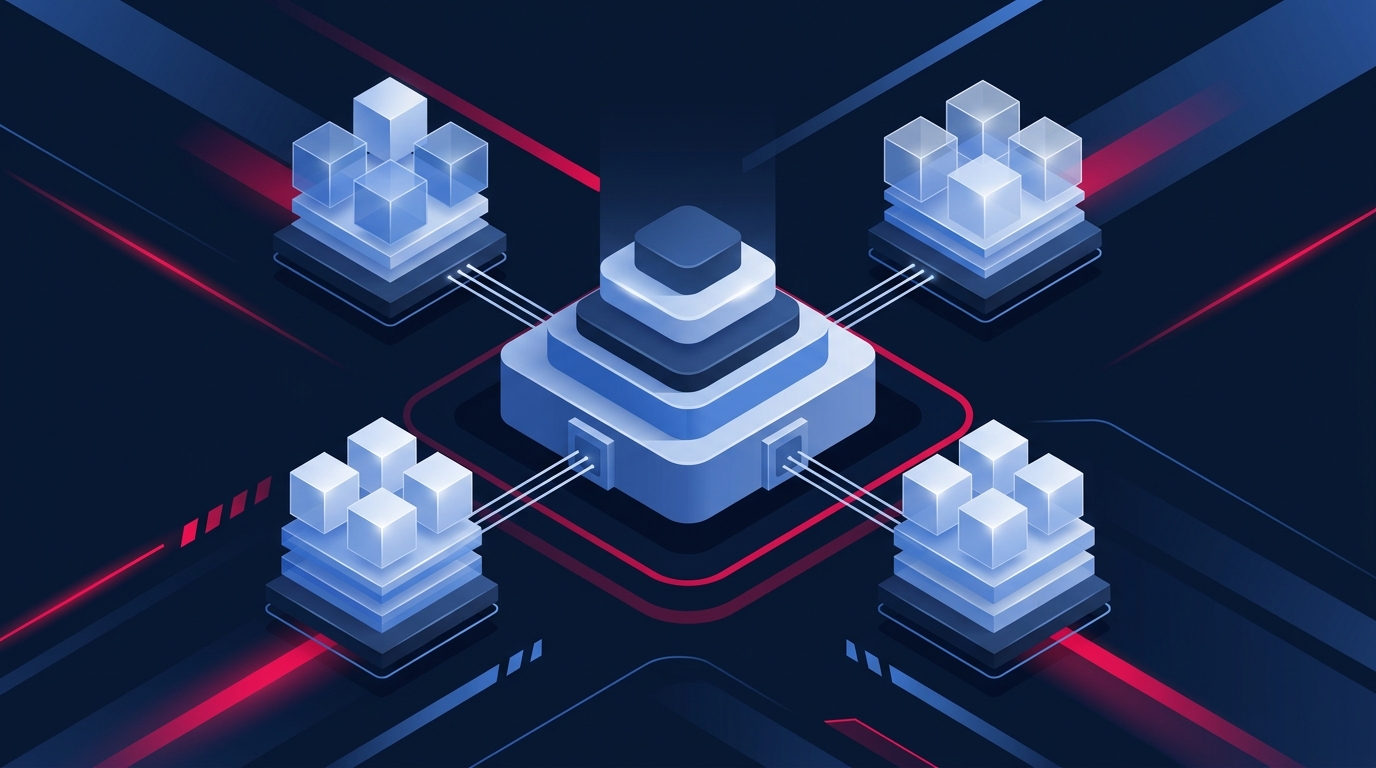
The platform allows separating business logic, data, interface, and the integration circuit. This simplifies maintenance and helps localise changes when regulations or external services are updated.
Data model
Single source of truth
Entities, relationships, reference books, and statuses are described centrally. This reduces data duplication and allows different modules to work with a consistent context.
- registries and object cards;
- versioning and statuses;
- automatic API generation.
Processes and rules
Regulations in the system
Routes, roles, validations, and status transitions can be configured in accordance with the official powers and internal procedures of the institution.
- sequential and parallel approval;
- delegation and escalations;
- deadline control.
Integrations
Systems working together
REST/API and a separate integration layer allow connecting document management to registries, email, signature services, and other application systems without manual data duplication.
- exchange of reference books and statuses;
- event-driven interaction;
- error control and redelivery.
Security and administration
Control of every action
A role-based access model, audit of changes, and segregation of administrator and user functions form the basis for secure operation. Specific security measures are determined by the requirements of the system and its environment.
- RBAC/RLS by roles and data;
- event logging;
- backups and configuration control.
Advantages of UnityBase for public institutions
- Faster adaptation. New forms, reference books, and routes can be developed on a common platform foundation.
- Complexity control. A single data model and standardised integrations reduce the number of point solutions.
- Scaling. The system can expand from a single process to the scope of an institution or a group of institutions.
- Transparent maintenance. Rules, roles, and changes must be described in the system and available for audit.
- Investment in reuse. Standard components can be applied in new modules, reducing development time.
What to check before implementation
The choice of platform should begin with an architectural assessment, rather than a demonstration of an individual interface. It is advisable to define:
- data owners, critical registries, and sources of reference information;
- user roles, powers, and access segregation rules;
- processes that must be end-to-end, and their control deadlines;
- integration formats, requirements for logging and error handling;
- requirements for the environment, backups, updates, and recovery;
- result metrics: processing time, overdue tasks, data quality, manual operations.
After this, a pilot can be launched: one priority process, a limited group of users, test integrations, and clear acceptance criteria. This approach reduces the risk of scaling an unsuccessful regulation across the entire institution.
The role of IQusion in creating solutions
IQusion specialists use UnityBase as the foundation for application systems in the public and corporate sectors: from electronic document management to registries and process automation. During the implementation phase, the team helps assess processes, design the data model, configure integrations, verify security, and train users.
‘UnityBase allows the public sector to implement digital transformation with high efficiency, ensuring the execution of tasks at a higher level with optimal costs,’ concluded Serhii Balashuk.
‘The most important advantage of UnityBase is its ability to adapt to any requirements of the public sector, providing a powerful toolkit for developing reliable and secure information systems,’ noted Mykhailo Vyhovskyi.