AI and the Office of the Future: Work Will Change, but Its Volume Will Only Grow
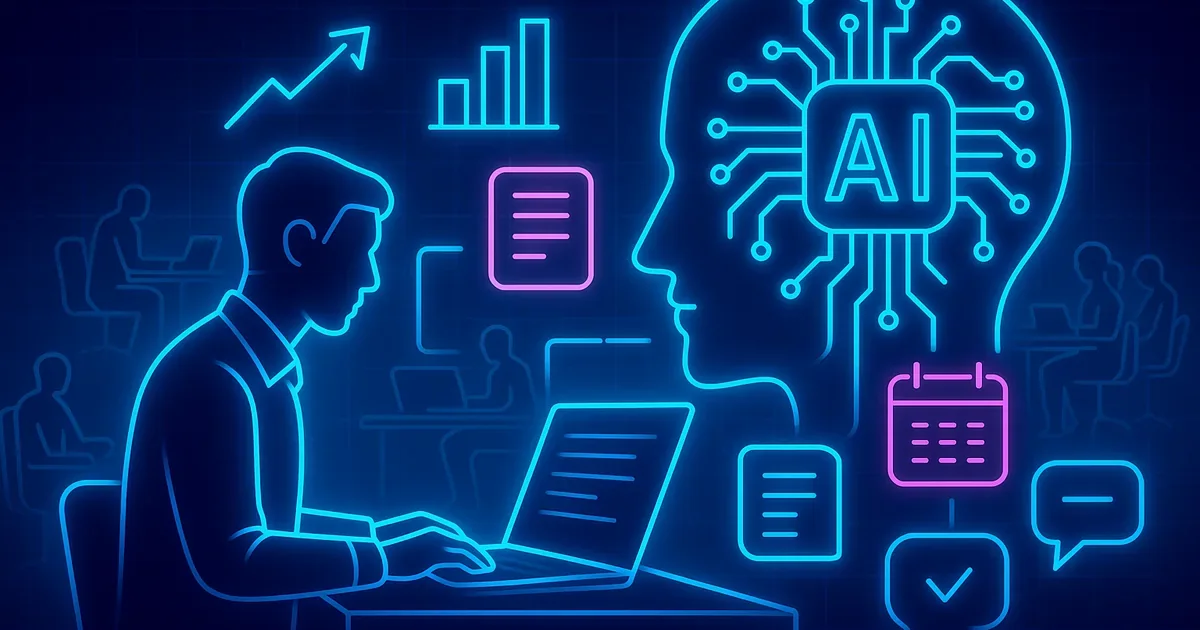
"AI will take our jobs" — this phrase is being heard more and more often. A very similar sentiment echoed in the 90s, when personal computers entered offices and government institutions en masse. Back then, people predicted the end of "paper" routine and staff reductions. The reality turned out to be different: document flow increased several times over, new roles emerged, and qualification requirements only went up. Today, we are entering the second wave — the AI wave. And just like back then, it is not destroying professions, but changing their structure and tools.
To separate myths from facts, the Microsoft Research team analysed more than 200 000 anonymised user conversations with Bing Copilot and mapped real queries to the work activities of various occupations. The result is a map of task "vulnerability" to AI and clear patterns of where exactly artificial intelligence empowers people the most.
Why the Parallel with the 90s Matters
Computers did not take away jobs — they changed them. Database administrators, EDMS specialists, and analysts appeared in offices and government institutions. A similar effect is already visible with AI: tools like Copilot "eat up" mentally burdensome routine, but create demand for the ability to formulate tasks, evaluate response quality, integrate results into the process, and make responsible decisions. This is not "minus work", but "re-arming with work".
28 Key Findings of the Study
- No profession is fully automated — a maximum of 68% of tasks can be performed by AI.
- Greater impact on office workers — "white-collar" workers delegate tasks to AI 10 times more often than technical professions.
- Most frequent queries to Copilot: information gathering, writing texts, consultations.
- High salary does not guarantee protection — the impact of AI is almost independent of income.
- Education does not save you — vulnerability exists in professions both with and without a degree.
- AI sometimes changes the essence of the query — errors are possible.
- AI changes the content of work rather than eliminating it — it is an "augmentor", not an "automator".
- AI is a co-creator — in 25% of cases, it proposes new ideas or structures.
- Structured tasks are performed better than creative ones.
- Maximum effect is in routine tasks (reports, FAQs, data structuring).
- Often AI delivers a better result than what was formulated in the query.
- Blurring of professional boundaries — performing tasks of another specialisation.
- Importance of correct query formulation — a new soft skill.
- New basic skill — prompt literacy.
- Tasks are automated, not professions — vulnerability varies even within the same specialty.
- Clear task boundaries = higher result.
- Middle managers benefit the most — they delegate routine.
- People often overestimate AI capabilities — 17% of queries are unfeasible.
- Humanities professions are more vulnerable than technical ones.
- Medicine — low vulnerability — clinical work remains with humans.
- Modular professions are easier to automate.
- AI is stronger in narrow tasks than in complex solutions.
- Language professions are in the higher impact zone.
- AI is less effective at replacing collective decisions — strategic meetings, debates.
- AI mimics expertise — critical thinking is crucial.
- Leadership is irreplaceable — emotions and trust remain with humans.
- AI changes time allocation — less mechanics, more analytics.
- AI shapes a new logic of work — standardised structures of thinking.
Practical Dimension for Offices and the Public Sector
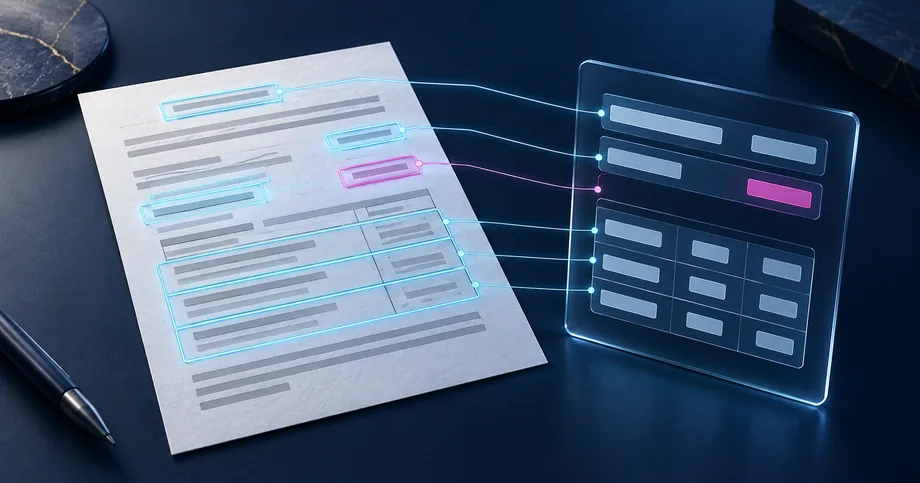
- Document flow. Automatic drafts, summaries, extracts; completeness checks of fields; suggestions for next steps. The human focuses on exceptions and content, not on format.
- Analytics. Rapid consolidation of statistics and preparation of different report versions (for management, audit, external bodies), while decisions are made by humans.
- Communication. Standard replies, FAQs, official letters are delegated; sensitive cases and public debates remain in the human domain.
- Skills. Prompt literacy, fact-checking, working with risks and data policies become key — the "superpower" of the middle tier.
How to Prepare Your Team: A Short Checklist
- Identify tasks with clear boundaries (instructions, standard letters, template reports) — and start delegating them to AI.
- Introduce "double control": AI prepares, human approves and is responsible.
- Train employees in prompt literacy and basic fact-checking.
- Create internal quality standards for texts and reports produced with the help of AI.
- Update data security policies and decision logging.
How IQusion IT Prepares for Technological Changes
IQusion IT develops innovative electronic document management systems and implements AI as a practical tool to increase productivity without compromising on quality and security:
\n\r\n- \r\n
- Intelligent drafts and summaries: automatic document structuring, extracts, style normalisation. \r\n
- Completeness and compliance control: verification of mandatory fields, consistency of dates, references to regulations. \r\n
- Search and analytics: Q&A across repositories, quick summaries for management, preparation of multi-version reports. \r\n
- Human control at every step: roles of responsible persons, verification checklists, change tracing. \r\n
- Data security: operation within the customer's infrastructure, access policies, activity audit, compliance with government requirements. \r\n
The experience of the last century proves: technology does not take away work, but makes it different. The Microsoft study confirms: it is not professions that are automated, but specific tasks; AI acts as an amplifier, not a replacement. Those organisations that already today delegate routine to artificial intelligence and empower people with critical thinking, process control, and security will win in productivity and decision quality. And this is exactly how we build implementations at IQusion IT.
\r\nSources
\r\n- \r\n
- Microsoft Research: Working with AI: Measuring the Occupational Implications of Generative AI (July 2025). \r\n
- arXiv: Measuring the Occupational Implications of Generative AI — preprint of the study (July 2025). \r\n
- GeekWire: Review of methodology and findings of the Microsoft Research study (August 2025). \r\n
- Investopedia: Professions with high "AI applicability" (August 2025). \r\n
- Microsoft Research: The Impact of Generative AI on Critical Thinking (April 2025). \r\n