Digital Reception: A Single Route for Citizen Petitions in the EDMS

Email, web forms, paper letters, and integrated government services can deliver documents to a single electronic document management system (EDMS). However, a shared point of registration does not imply the same legal procedure for every message. First, it is necessary to determine the content of the document, the competent authority, and the regulation under which it will be reviewed, and only then assign the route, deadline, and assignee.
Therefore, a digital reception must operate as a controlled conveyor: preserve the original incoming message, verify formal mandatory fields, assist the registrar in classifying the document, and record every decision. Automation can provide suggestions but must not independently determine the legal status of a petition or reject an applicant.
Current Rules for Electronic Petitions
The basic act remains the active Law of Ukraine "On Citizen Petitions" No. 393/96-VR. Article 5 requires the specification of the surname, first name, patronymic, place of residence, and the essence of the raised issue; an electronic petition also requires an email address or another means of communication. A qualified electronic signature (QES) is not mandatory for sending such a petition.
The absence of a QES is not a ground for rejecting an electronic petition, and the absence of an individual mandatory field cannot be automatically equated to anonymity.
Articles 7 and 8 of the Law provide for different consequences for petitions drafted without the established requirements and anonymous petitions. An anonymous petition is one without a place of residence, not signed by the author, or one from which it is impossible to establish authorship. Therefore, the EDMS must flag the identified issue and forward it to the registrar according to the configured regulations, rather than assigning the "anonymous" status solely due to an empty field.
Channel Architecture: Where Diia and Trembita Are Appropriate
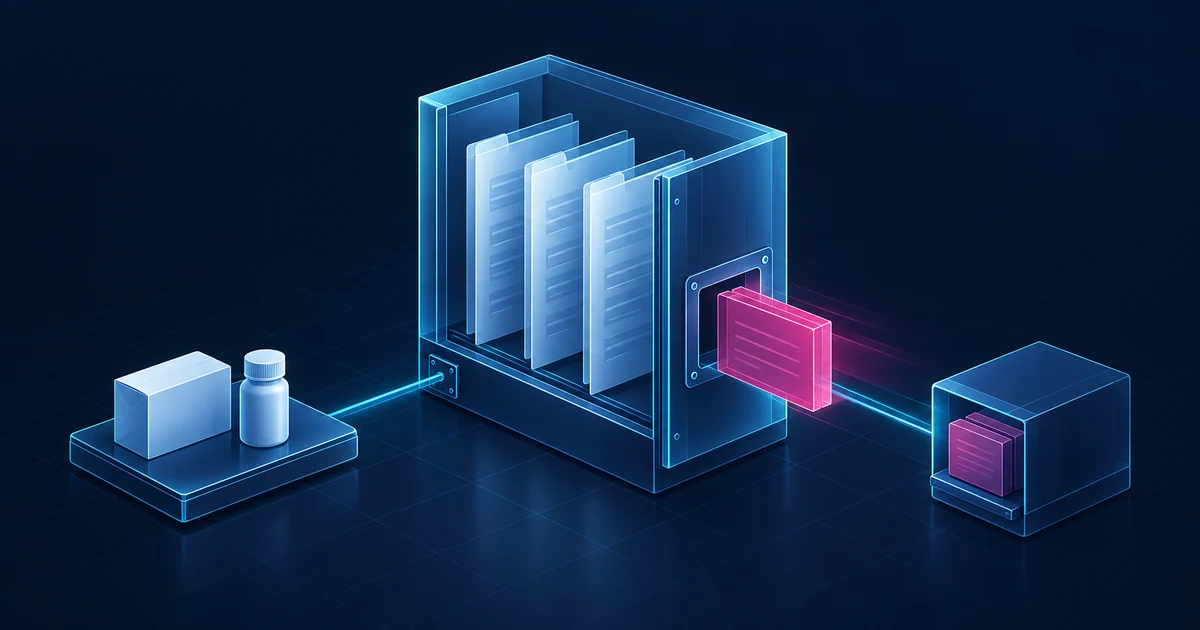
Each incoming channel should be connected via a separate adapter with a fixed data contract. The system must preserve the original letter or package, channel, time of receipt, attachments, external identifier, and the result of technical checks. After this, the normalised metadata is transferred to the registration card.
The Trembita SEIR is a system for the electronic interaction of state information resources, not a universal reception for petitions. Data transfer from Diia or another government service to a specific EDMS is possible only when a legal basis, an agreed information exchange, and an implemented interface exist for the corresponding service and authority. The mere fact of connecting to Trembita does not create an automatic route for all petitions.
IQusion is an official supplier and co-developer of Megapolis.DocNet. The open architecture of the system, APIs, ready-made connectors, and flexible configuration mechanisms make it possible to implement virtually any required integration scenario: connect state and corporate information systems, define data structures, authentication rules, processing routes, and deadline monitoring. Thanks to extensive experience in implementing complex EDMS solutions, the IQusion team can design and configure a digital reception tailored to the processes of a specific authority — from the receipt of a petition to registration, execution, and reply to the citizen.
Subject to legal and organisational grounds, Megapolis.DocNet allows for the implementation of integration exchanges with state digital services, in particular via the Trembita SEIR, in the configuration required by a specific customer.
\n\nVerifying Mandatory Fields Without Replacing Legal Decisions
The primary automatic check must be auxiliary. It can determine the presence of mandatory fields, the address format for replies, the integrity of attachments, the presence of an electronic signature, and potential matches with previously registered documents. If a signature is attached or required for a specific procedure, the system can forward it for technical verification.
- Preserve the original: Record the message, attachments, channel, and exact time of receipt without altering the primary content.
- Verify mandatory fields: Flag present and missing data without making an automatic conclusion about the anonymity or acceptability of the document.
- Suggest classification: Determine the likely document type based on its content and present the suggestion to the registrar.
- Record decisions: Save the author of the decision, legal basis, route, deadline, and all subsequent changes in the audit log.
Such an approach leaves routine checks to the machine, while the legally significant decision remains with the authorised employee. It also makes it possible to explain why a document received a certain status and who changed it.
How to Distinguish Between Petitions and Administrative Procedures
The route is determined not by the channel, but by the subject matter and the desired outcome. A proposal, petition, or complaint within the meaning of the Law "On Citizen Petitions" and an application by which a person initiates administrative proceedings may arrive via the same method but are processed under different rules.
The Law of Ukraine "On Administrative Procedure" No. 2073-IX provides for an oral or written form of application; a written application may be electronic or paper-based. Requirements for signing, authentication, and submission methods depend on this Law, special legislation, and the specific electronic channel. In cases provided for by law, an electronic application can be submitted via the Unified State Web Portal of Electronic Services without an electronic signature, subject to personal authentication.
Consequently, a letter requesting an administrative service should not be automatically turned into a regular petition or unconditionally redirect the applicant to Diia. The registrar must establish the applicable procedure, verify the competence and requirements of the specific service, and the system must suggest the correct route and notification template for the applicant. The deadline is determined by the regulation governing the respective proceedings.
Registration and Deadline Monitoring
Resolution of the Cabinet of Ministers of Ukraine No. 348 approves the Instruction on Record-Keeping for Citizen Petitions. Its requirements must be reflected in the registration, accounting, indexing, execution monitoring, and reporting schemes. At the same time, the review period for a petition itself is determined, in particular, by Article 20 of Law No. 393/96-VR.
Petitions that do not require additional study must be reviewed immediately, but no later than 15 days from the date of receipt. The general deadline is no more than one month. If it is impossible to resolve the issue within this period, the head or their deputy may establish the necessary period while notifying the applicant, but the total period must not exceed 45 days.
Before launching a route, the CDTO should verify the following settings:
- Legal basis: Each document type is linked to an active act, competent department, and deadline calculation rule.
- Deadline monitoring: The completion date is calculated from the receipt date and the applicable rule; reminder thresholds are SLA settings, not an invented legal provision.
- Search for potential duplicates: Matches by contacts, subject, and attachments are only suggested to the registrar. The system does not automatically block a new card based on the RNTRC or an arbitrary 30-day rule.
- Audit and reporting: Registration data, route changes, deadline extensions, applicant notifications, and review outcomes are stored as traceable events.
Frequently Asked Questions
\nHow to process an electronic petition without a QES?
Do not reject it solely due to the absence of a QES: the Law of Ukraine "On Citizen Petitions" does not require an electronic signature for sending an electronic petition. The EDMS must verify the mandatory fields from Article 5, record the missing data, and forward the document to the registrar according to the established regulations.
What should be done if a request for an administrative service is received by email?
Determine the specific service, competent authority, special legislation, and permissible submission method. Depending on the procedure, the applicant may be notified on how to supplement the application or use the designated electronic channel; automatically demanding Diia for all cases is incorrect.
How to avoid duplication of documents from different channels?
The system can search for potential matches by contact details, subject, external identifier, and attachments, but must display them to the registrar as a suggestion. The decision to merge documents or create a new card must be recorded and not based on a single identifier alone.
Sources
\n- Law of Ukraine "On Citizen Petitions" No. 393/96-VR
- Law of Ukraine "On Administrative Procedure" No. 2073-IX
- Resolution of the CMU No. 348: Instruction on Record-Keeping for Citizen Petitions
- Trembita 2.0: launching a pilot of a major system update
- Regulatory and legal framework regarding citizen petitions
- Megapolis.DocNet: details and functional capabilities of the system