Server Infrastructure Virtualisation: Resource Optimisation

The increasing load on state information systems under security threat requires rational use of computing resources. Limited budgets, increased security requirements, and the need for rapid deployment of new services create a demand for technological solutions that provide flexibility without sacrificing stability.
This information overview summarises IQusion's practical experience in implementing server infrastructure virtualisation for government agencies and infrastructure enterprises. It examines approaches to server consolidation, centralised resource management, and ensuring fault tolerance within existing data centres.
Physical Resource Consolidation
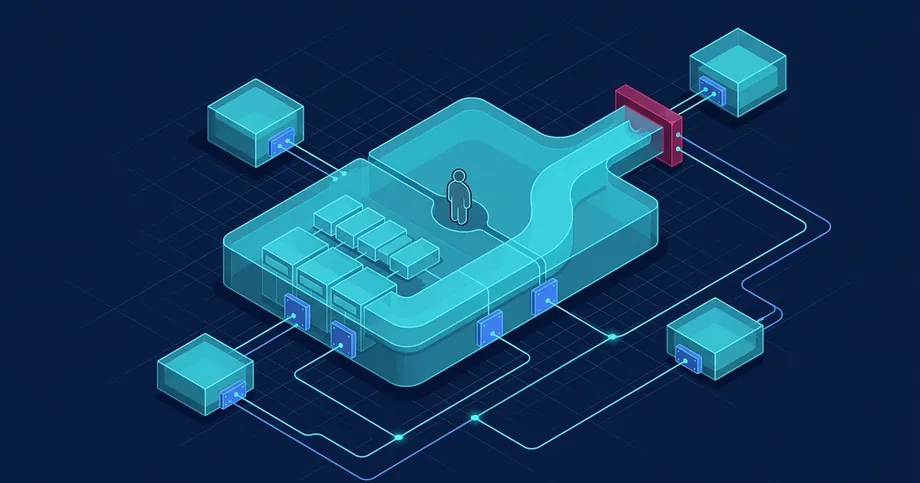
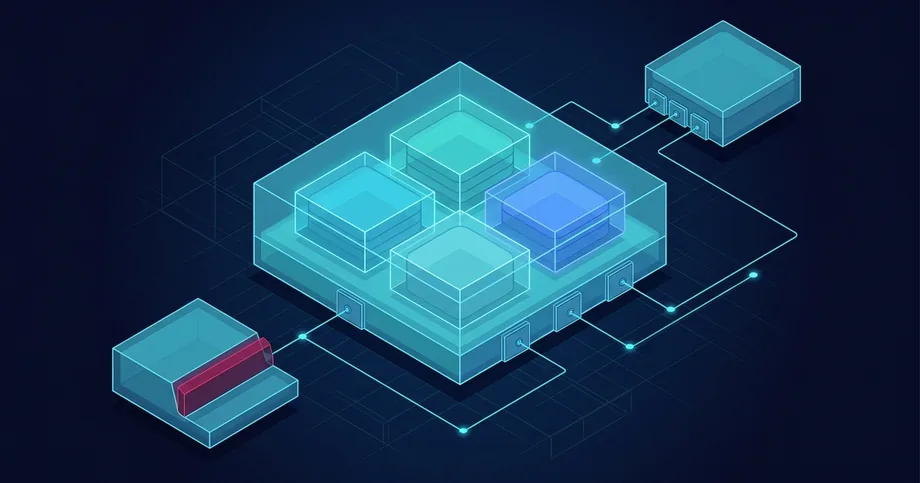
The traditional model, where each information system was deployed on a separate physical server, proved inefficient in terms of processor load and RAM use. Virtualisation allows multiple isolated environments to be hosted on a single hardware node with guaranteed resource allocation.
IQusion applies hypervisor clustering models with the ability to automatically reallocate virtual machines in case of increased load or physical equipment failure. This approach ensures the stable operation of government registries and electronic document management systems.
Additional benefits are achieved by reducing the number of physical servers, lowering energy consumption costs, and simplifying infrastructure maintenance.
Deployment Flexibility and Scalability
A virtualised environment allows for the rapid creation of new server instances for testing, backup, or production tasks without purchasing additional hardware. This is especially crucial during an active conflict phase when response speed becomes a critical factor.
Integration with centralised monitoring systems enables real-time resource load control and forecasting of scaling needs. Administrators gain tools for managed allocation of CPU time, memory, and disk space.
Component architecture of application systems combined with virtualisation simplifies service migration between nodes without interrupting business processes.
Security and Environment Isolation
In conditions of increased cyber risks, the isolation of critical systems is of particular importance. Virtual network segments allow separating access to various subsystems — from internal service modules to external REST interfaces.
IQusion implements multi-level access control, data transmission channel encryption, and regulated backup policies for each virtual environment. This ensures the protection of personal data and official information even if a single segment is compromised.
Backup copies of virtual machines are stored on remote sites with verification of their operability, allowing systems to be restored within the stipulated timeframes.
Phased Implementation and Long-Term Efficiency
Practice shows that virtualisation should be implemented in phases, with an audit of existing services and an analysis of their load. This helps avoid cluster overload and maintain predictable performance.
IQusion views virtualisation not as a standalone technology but as an element of a comprehensive high-availability architecture. A systematic approach to resource optimisation ensures the stable operation of state information systems and creates a foundation for further infrastructure development.