The Licence Price Is Only Part of an EDMS Budget
The line 'electronic document management system (EDMS) implementation' can describe different projects in two proposals. One may deliver a configured system with the archive still to be migrated. Another may also include the migrated documents, tested data exchange and an agreed support arrangement. Before comparing the totals, establish what each price is intended to deliver.
InBase's article on the cost of electronic document management systems looks beyond the licence to configuration, data migration, integration and support. Our task here is to put different proposals on the same footing, so the project's full funding and staffing needs become clear.
One licence, two different scopes of work
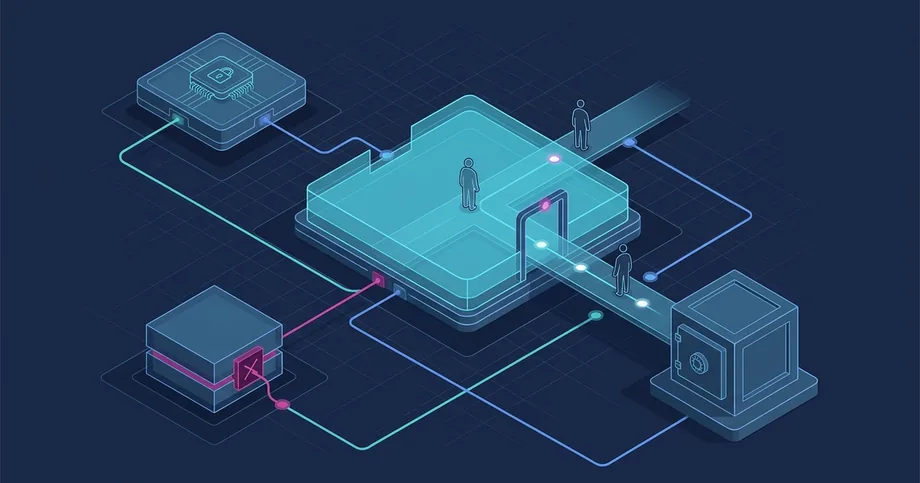
Imagine an organisation choosing an EDMS for internal business documents. Both proposals offer the same usage rights, modules and number of users, at the same licence price. Their totals differ because they include different work. This is an illustrative scenario, not a comparison of actual suppliers.
Under the first proposal, some tasks fall to the internal team or another contractor. That may suit an organisation with available staff and prepared data. The second covers more work, but its scope still needs checking. A longer list of services does not prove that every service is needed.
Ask suppliers to mark each required task as included, excluded or needing clarification. Then bring the proposals into line with the agreed scope. A blank cell does not mean a free service: until you have an answer, that part of the budget remains unknown.
Specify an outcome that can be priced
A shared scope of work starts with what should change for the user. For example, an employee can find a migrated business document, open its attachment and view its registration details within their access permissions. This turns the broad instruction 'migrate the archive' into specific tasks.
The U.S. Government Accountability Office's cost-estimating guide covers the estimate's purpose and scope, schedule, technical description, work breakdown and assumptions. It offers a method for planning, rather than a source of EDMS prices.
- What is being counted? A document with attachments, an individual file, an approval workflow or a data exchange scenario — specify the unit being priced.
- How much is included? Specify quantities, scope and exceptions, including document versions, formats, workflow branches and directions of data exchange.
- Who does the work? Assign preparation, configuration and checking to the supplier, your own team and other participants.
- How will it be accepted? Define the required test results, who will accept the work and how issues raised during review will be handled.
Start by examining a sample from the archive. Does it contain damaged attachments, duplicates or different names for the same departments? If the condition of the data is unknown, ask for the initial assessment and the migration work to be estimated separately, with their assumptions recorded. This gives a more honest basis for comparison than an apparently precise total with no explanation of the starting conditions.
Microsoft's Dynamics 365 migration guidance recommends defining data sources, types, volumes, the migration sequence, checks and responsibilities. That planning approach is useful for our example; it does not establish what any particular EDMS can do.
Budget beyond the launch date
Use the same comparison period, from preparation through the agreed period of operation. Ask when charges begin, what they cover and which services are already included. Otherwise, one proposal may cover only launch while another includes ongoing support. Do not count support twice if it is already included in the subscription.
| Category | What to describe | How to compare |
|---|---|---|
| One-off costs | Preparation, configuration, migration, launch | The same deliverables and scope of work |
| Recurring charges | Subscription, support, and other agreed services | The same period, scope and terms |
| Internal staff time | Data preparation, testing, training | Hours and team availability, shown separately from payments |
| Possible changes | Another workflow, more archive material or an additional data exchange | A separate scenario with documented estimating assumptions |
Staff time is not a free resource simply because the supplier does not invoice for it. Equally, internal hours do not automatically create an additional cash payment. Plan who will prepare the archive and check the results, what other duties they will continue to perform and whether those duties need cover.
If your organisation assigns a cost to internal staff time, explain the method and avoid counting the same costs twice. Show any planned additional payments separately. This gives managers a view of both funding needs and the demands on staff.
Apply the same approach to cloud hosting and on-premises servers: check the services included and who is responsible for them. Clarify who provides backups, recovery, a test environment and updates. The deployment model's name alone answers none of these questions and does not establish which option is cheaper.
Agree on what "done" means
In our example, suppose the import finishes without an error message. Is that enough to accept the migrated archive? Agree on checks for document counts, attachments, required registration details and access for different roles. Specify how missing records will be logged and who will resolve discrepancies.
For an integration, write a short scenario: what triggers the exchange, what data is sent, what comes back and how staff are notified of a failure. Access to an API does not, by itself, define a working data exchange. Also clarify who will modify the other system if changes are needed.
Microsoft's Dynamics 365 testing guidance ties the plan to requirements and includes entry and exit criteria, roles and test results. Acceptance involves business users; confirming readiness does not mean that every defect has been eliminated.
Check the support terms against a specific incident. Who receives a report of a failed data exchange, who investigates the cause and who is responsible for the external system? Discuss the initial response time separately from the expected resolution. This turns the word 'support' into a clear allocation of responsibilities.
Assess changes before work begins
During preparation, you may discover that the archive needs to include another department's documents or that an approval workflow needs changing. Record how the request differs from the agreed scope. Ask for its impact on work, timescales and recurring charges to be assessed, then establish who will decide whether to proceed.
Not every clarification is additional chargeable work. Check it against the original scope and acceptance criteria: correcting a failure to meet a requirement is different from expanding that requirement. For questions that still need investigation, record assumptions and the conditions for revising the estimate rather than quietly adding work to the agreed scope.
Compare the price of delivering the same result, not matching labels in proposals.
Start with a shared scope of work, supported by archive samples, a data exchange scenario and a list of tasks for your own team. Take these to a discussion with IQusion and the other project participants. They provide a concrete basis for clarifying the scope, outstanding questions and acceptance criteria before the budget is set.
Frequently Asked Questions
What if the supplier cannot estimate the migration yet?
Find out what information is missing: the size of the archive, sample files, field descriptions or access to the old system. If necessary, agree separately on an initial assessment, its deliverables and the basis for a later estimate. Do not record an unknown cost as zero.
How do you compare a fixed price with hourly billing?
Start with the outcome, scope and assumptions. For hourly work, clarify the estimated hours, reporting arrangements and how overruns are approved. For a fixed price, check exclusions and the conditions under which the price can change. The pricing model alone does not determine which option is cheaper.
Should the entire archive be migrated at once?
That depends on which documents are needed in the new system and how the rest will remain accessible. To compare proposals, agree on the same migration scope and separately describe access to any material outside it. Work deferred to a later stage should remain visible in the plan.